
Know Thyself
On January 1, 2023, I stood in front of the United Methodist Church for All People in Columbus, Ohio, and publicly shared that my name is Joelle, my pronouns are she/her, and I am a transgender woman. This announcement was met with incredible support. The church was packed as I had already shared my identity with the overwhelming majority of the congregation. Even when I stood to offer the call to worship at the beginning of the service, people applauded. The church gave three standing ovations during the sermon, and we celebrated after the service with a community meal.

The sermon that day was titled, “New Beginnings” and the congregation sang the hymn, “This is a day of new beginnings.” However, while people were coming to know me in a new way, my gender identity was not new to me. In fact, personally, this new day for the church was the end result of years of growing self-awareness, countless hours of therapy, gut-wrenching prayer, and sharing with chosen family.
Often, this reflective work is a painful and difficult journey. Understanding yourself in a new way and what that means to live that out in the world is the most difficult thing I have ever done. This is further complicated for queer people of faith who have heard scripture interpreted through the lenses of gender normativity and queerphobia. Embracing the realization of being transgender can result in feelings of shame and fear of exclusion from faith communities. This is even more complicated for faith leaders, whose career is often put on the line because of who they are. Erin Swenson, the first known mainstream transgender pastor to remain in ordained office, writes of the feelings they had as they prepared to be questioned by their board of ministry. Erin prayed, “God, how could you? What do you mean saddling me with this? I had no idea what I was doing, and I found no guidance anywhere.”
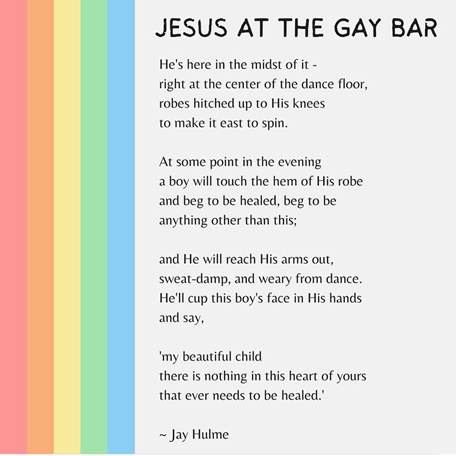
This fear of exclusion and prayer for release from one’s gender diversity is articulated in the poem, “Jesus at the Gay Bar” by the transgender poet and theologian Jay Hulme. Hulme’s poem points to both the shame imposed on the boy by the dominant culture and the joy and acceptance that is found in the cupped hands of Jesus who dances at the gay bar. Publicly living into one’s authentic self can not only cause fear, but can internally be a deeply life-giving experience. Craig Rubano points to this in the gender creativity of children who play as mermaids and in doing so discover their true-self. This process of play, whether in a child dressed in a mermaid costume or a drag performer in stiletto heels, leads to an embracing of the Jungian true self over the mask of the false self, worn to feel safe in society. The false self can be a necessary means of functioning, providing self-protection among social restrictions. However, a person who has done the deep work to connect with and operate from their true self is more equipped to provide spiritual care because of the transformative work of moving from resignation to celebration of oneself.
For LGBT+ people, the process that leads to coming out is similar to work that is done in Clinical Pastoral Education (CPE). Two of the objectives of an accredited CPE program are to “Develop a greater awareness of their identity and authority as spiritual care providers” and to “Develop self-awareness and self-understanding as these inform one’s personal and professional identity and functioning.” CPE provides the opportunity for knowing and caring for oneself, and being self-reflective, so that spiritual caregivers can be fully present and provide spiritual care to others. Because of their internal work of self-discovery, transgender people are specially equipped to fulfill these objectives. Chaplain Tracy Nolan points out how transgender people navigate the combination of self-awareness and social expectations, “Trans folks have figured out how to thrive in a world whose gender norms often grate against their very existence. There’s a lot of strength already present in trans folks, and reminding people of their resilience is an important pastoral task in itself.”
After self-awareness, two more objectives of CPE are to “Develop sensitivity to the feelings of those with whom one works” and to “develop the ability to respond with empathy.” Developing empathy gives the caregiver the ability to be present with others in a compassionate, non-judgmental, and understanding manner. For Ellis Arnold, who has served as a United Church of Christ chaplain and pastor, the deepened self-awareness cultivated in wrestling with gender identity leads to greater empathy:
I also think there’s a deep level of empathy. For folks who have had to figure out who am I, how am I, how do I want to show up in the world… There’s a level of acknowledging that can be a hard journey, discovering about oneself. And so I think, for trans folks who have not only worked through that identity piece, but who have had to do it amidst some opposition, recognizing that that identity works in that differentiation comes at a cost. Whether that’s working with a teenager who is trying to figure out how do I assert who I am in my family of origin, or other queer folk, or any variety of things. I think there’s a common human experience of having to come out of the closet. Not just about gender and sexuality, but about what are the things that are a part of who I am, that I don’t want to be seen, or I’m not yet ready for the world to know.
I and Thou
As I prepared to publicly come out as a transgender woman pastor, I wondered if my gender would negatively impact the diversity of our church. Using incorrect generalizations, I (and other people) wondered if we would turn off low-income African Americans and attract white progressives. In reality, I received overwhelming acceptance from people living in poverty and have had significant struggles with some white, middle, and upper-class folks. This has led me to adopt the phrase, “the community has never done me wrong”.
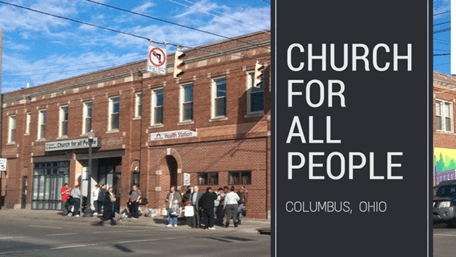
Not only was my gender accepted by people, but it also opened doors to be in ministry with people who previously did not feel included in the church. Every winter, Church for All People hosts an overnight warming center in the sanctuary so homeless people survive. Many of these people have diverse sexual orientations and gender identities. My openness resulted in new relationships with several Black, transgender women who then became a part of our church and community.
This shared empathy helped my process of coming out with church members who live in poverty and a society defined by racism. Deaconess Katelin Hansen explained, “Folks knew we had to be good with this, so as to not belie that name (Church for All People), and I think so many of us do identify as misfits that it just has to be okay.” Arnold views LGBT+ people as the lived theology that gives other people permission to be their authentic selves, “queer folk are the public performance of that theology that allows people then to see themselves in it.
One of the opportunities transgender faith leaders bring is that we can be a bridge across many types of intersectionality. Every year Transgender Day of Remembrance is honored on November 20. The names of dozens of transgender people who have died from violence in the last year are read. As the faces of victims are shown, they are overwhelmingly young, transgender, Black women.

Intersections of race, class, orientation, and gender provide opportunities for transgender care givers to build relationships that might be more difficult for cis-gender people to bridge. Because of my gender identity, although I am white, I work in close relationship with Columbus’ Black Queer and Intersectional Collective (BQIC) hosting training events, speaking at rallies, and providing spiritual care.
Not only can the practice of self-care provide room for care-recipients to be more authentic, but it can also offer a larger understanding of God. As a pastor, my coming out has pushed people to expand their understanding of who is the neighbor we are called to love and their understanding of God. If all people have sacred value and divine worth, that includes people like me. Sarah Gibb Millspaugh writes, “God, in whose image both male and female are made, is beyond gender or comprises aspects of female and male. God, in this sense, is transgender. Imaging God as transgender is both biblically accurate and theologically sound. People who are transgender are, then, created in God’s image, just as much as non transgender males and females.” Ellis Arnold points to the commonality of shared struggles:
There’s a sharing, even amongst the diversity of experiences, of how that works itself out. A softness towards one another. Stories, and I think a propensity to believe one another’s stories. That’s the gift that folks on the margins from different kinds of groups and experiences offer one another. It’s true, because I’ve experienced it. I know it’s true, because you’ve experienced it. There’s a really powerful gift that folks offer in that way.
Protect Ya Neck
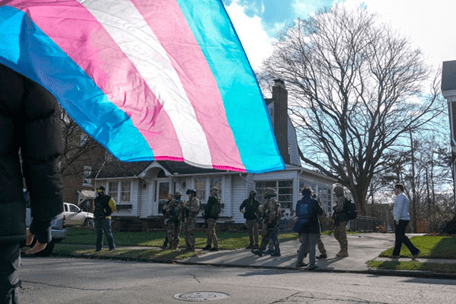
Transgender rights have become one of the most contentious political issues in the United States, with nearly 600 anti-trans bills proposed across the country. A study by the Pew Research Center reported “About four-in-ten U.S. adults (38%) say that greater acceptance of people who are transgender is generally good for our society, while 32% say it is bad and 29% say it is neither good nor bad.” As a result of this public divide, pastoral caregivers are inevitably called on to care for the very people who do not care for us.
In John, Chapter 10, Jesus described himself as a good shepherd, a shepherd who lays down his life for his sheep. But as caregivers, we are called to not only heal, guide, and lead the sheep to still waters, but to love the thieves who try to rob us of our human dignity and sacred worth and bring them to green meadows.
While hundreds of people cheered at the Church for All People on the day I came out, support was not unanimous. Some said I was living contrary to the will of God while others told me they loved me but could no longer be a part of the church. And yet, I am expected to remain in relationship and provide pastoral care to those who demonstrated overt transphobia and have called me an abomination and have said I am going to hell. One woman who publicly shared she was no longer tithing to the church was in my office a week later seeking pastoral care amongst the stress experienced in caring for her older sister.
As a pastor I cannot be responsible for other people’s stuff, but I am trying to bring people along with me. Liam Robins shares a similar experience as a CPE Educator, “Had I pushed students to accept me by agreeing with me, I would have been violating their autonomy and doing just what the church and others had done to me all my life—not allowing them to be themselves. Instead, I believed that through exposure, experience, and invited curiosity, people find ways to overcome barriers that others have given them along their journey.”
In February, I spoke at the National LGBTQ Task Force’s Creating Change conference in San Francisco, California. I was one of six transgender faith leaders sharing my story—and the only person serving in full time ministry as the pastor of a church. This illustrates the complexity of gender divergent church leadership. While challenging, transgender people do serve as lead pastors of churches. In order to do so effectively and for the long term, pastors must be intentional and consistent in their practices of self-care.
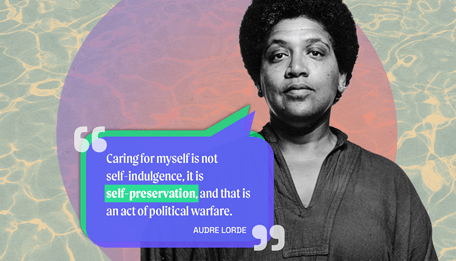
The truth is—we, as transgender faith leaders and caregivers, have to protect our own humanity. I cannot change the national or state conversations. I cannot control what other people say within and outside the walls of our church. I can only care for myself, so that I can care for others. My therapist continually challenges me to observe other people’s behaviors without absorbing their emotions. Robins requires their students to establish a self-care goal. This same practice would be advantageous for transgender clergy.
We will walk into hospital rooms, the homes of hospice patients, and sanctuaries where our gender identity and expression are not celebrated. This reality makes it necessary for transgender faith leaders to practice what Alice Walker calls self-love. For Walker, this type of self-care is counter-cultural with an insistence on loving oneself and one’s body, regardless of the messaging of the dominant culture.
While this paper explores the impact of a transgender person providing care, the same lessons can be drawn for any marginalized person. This requires all marginalized people to practice a greater level of self-love than those in the dominant population: self-care as an act of rebellion.
In the same way, Angela Davis speaks about the importance of developing an individual and communal practice of radical self-care. She reflects on her experiencing working for social justice and learning to recognize the need for this practice:
For a long time, activists did not necessarily think that it mattered to take care of themselves; in terms of what they eat, in terms of mental self care, corporal self care, spiritual self care… I know that there were some people who emphasised it.. I’m thinking about one of the leaders of the Black Panther Party, Ericka Huggins, who began to practice yoga and medication in the 70’s, and she encouraged many people including Huey Newton and Bobby Seale to join that practice.. I think they did a little bit of it, but I think that movement would have been very different, had we understood the importance of that kind of self care. Personally, I started practicing yoga and meditation when I was in jail. But it was more of an individual practice; later I had to recognise the importance of emphasizing the collective character, of that work, on the self.
Even with all of these practices of self-care that empower transgender caregivers to build themselves up amongst those who would tear them down, there is also a need to draw a line and maintain healthy boundaries. There are instances in which care cannot be provided because of the need for safety of the provider. Robins shares, “You know, sometimes it’s too clear that if that they don’t accept us, or if they knew they wouldn’t accept us, that for our own safety, both psychologically and physically, we have to remove ourselves. That can happen and we need to be aware of our boundary in that setting.”
Timothy Jackson makes a similar case in his book, “Priority of Love”. Jackson points out a contrast between agape love and a cruelty of love. In order for Christian love to be authentic, it has to be reciprocal and certainly cannot cross a line that is abusive. Putting this into practice, Christian love is not found in a transgender caregiver taking endless abuse from a transphobic person. The sacrifices made of caregivers has to be voluntary and for a greater good. Jackson writes, “The attempt to be universally benevolent may seem to safeguard one against the loss of a particular loved object, but such “aim-inhibited”
love finally calls for too massive a self-denial, if not self-delusion. The psychic toll is too high, and this leads in turn to social friction.”
Another essential self-care practice is therapy. I recently attended a training in which the facilitator provocatively said that a pastor who is not in therapy should be considered malpractice. Sarah Gibb Millspaugh writes, “Therapy, for those transgender people who can afford it, can be profoundly helpful in the courageous journey to healing and self-acceptance. The presence or absence of professional therapy in the life of a transgender person can influence the type of pastoral care a caregiver is called upon for.” I would add that therapy should not only be a tool for those who can afford it but is essential for all caregivers.
Another key component of self-care for transgender faith leaders is the development of chosen family. Especially for people like me who have a strained relationship with our family of origin, we must build relationships with people similar to us (queer and transgender), who celebrate us, and to whom we do not have to explain ourselves. Like healthy birth families, members of chosen families lean on each other, offer mutual aid, care, and well-being support.
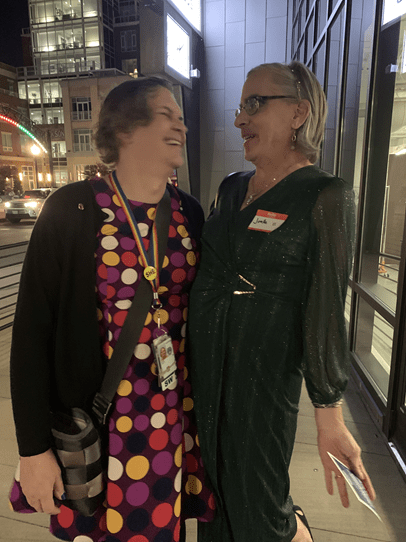
The number one indicator of long-term clergy effectiveness or burnout is connectedness. Clergy who find themselves in trouble tend to have isolated themselves from their peers. While participation in peer groups is important for all pastors, greater intentionality is necessary for minority groups. One resource for gender-diverse Christians is Transmission Ministry Collective. Within this organization is a specific support group for “Trans People in Ministry.” This group provides a forum for transgender faith leaders to share experiences and offer accountability.
Once we have done this work of radical self-care, not only are we able to be present with the very people who may not want to be present with us, we can also bring our unique giftedness of transgender caregivers. Robins explains, “If we’ve done our work as transgender folks, we bring that to the table as an invitation, and I think that it really can be seen as an invitation and a place of comfort. Because, if I’m really comfortable with myself, that does really invite other people to be comfortable with themselves.” The extra level of self-awareness required of marginalized peoples in loving themselvesgives other people permission to know themselves more fully.
 transpreacher.com